

In its latest Union Budget, the Indian government proposed an investment of $2.2 billion over five years to speed up Carbon Capture, Utilization, and Storage (CCUS) commercialization across the country’s most emissions-intensive industries. The funding aims to establish CCUS as a deployable infrastructure for large-scale industrial operations. This approach goes beyond pilots and demonstration units.
The plan focuses primarily on mitigating emissions in heavily polluting sectors, such as steel, cement, power generation, refining, and chemicals. In these industries, emissions come from process chemistry and energy intensity, not just inefficiency. For them, electrification and fuel switching provide only partial solutions.
From a policy perspective, this shift is practical. Instead of framing decarbonization as a choice between growth and climate goals, India is signaling that industrial progress will go hand in hand with carbon management. This positioning is increasingly relevant as carbon-linked trade measures, most notably Europe’s Carbon Border Adjustment Mechanism (CBAM), begin to influence global competitiveness and supply-chain decisions.
The investment builds on the groundwork laid in recent years. In 2025, India launched carbon capture and utilization clusters in the cement sector. The Department of Science and Technology led these projects. They turned one of the world’s most carbon-heavy value chains into a live test environment. This generated operational data and local expertise that now support broader deployment plans.
The market mechanics behind Carbon Capture, Utilization and Storage
Economics will ultimately set the pace for growth. India’s emerging carbon market currently focuses on reducing emissions intensity and offset activities. On the other hand, a dedicated framework to credit verified carbon capture and permanent storage remains under development. If implemented with strong monitoring and verification, this framework could reduce project costs, attract private investment, and speed up adoption across industrial sectors.
IeB Perspective
The constraint facing industrial economies isn’t the willingness to decarbonize, it’s the lack of scalable alternatives for core processes. Carbon removal technologies will therefore be essential for India’s net-zero trajectory. And with a $2.2 billion commitment, India is no longer experimenting with carbon capture, utilization and storage. It is preparing to industrialize it.
Verwandte Beiträge
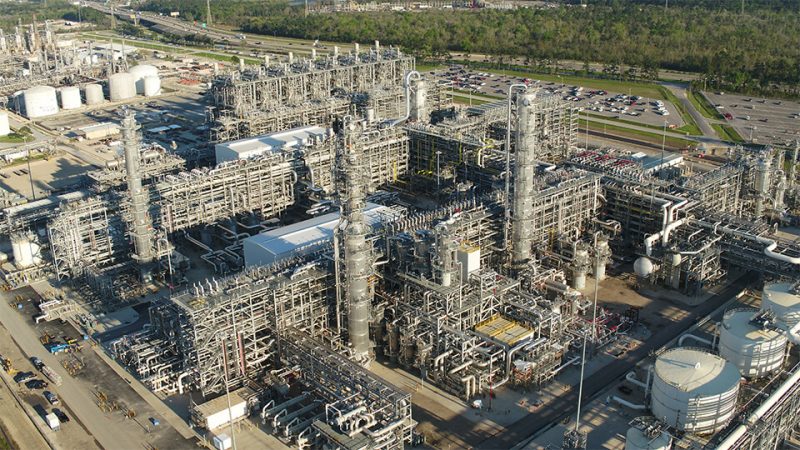
QatarEnergy, Chevron Phillips to build $6B petrochem plant