
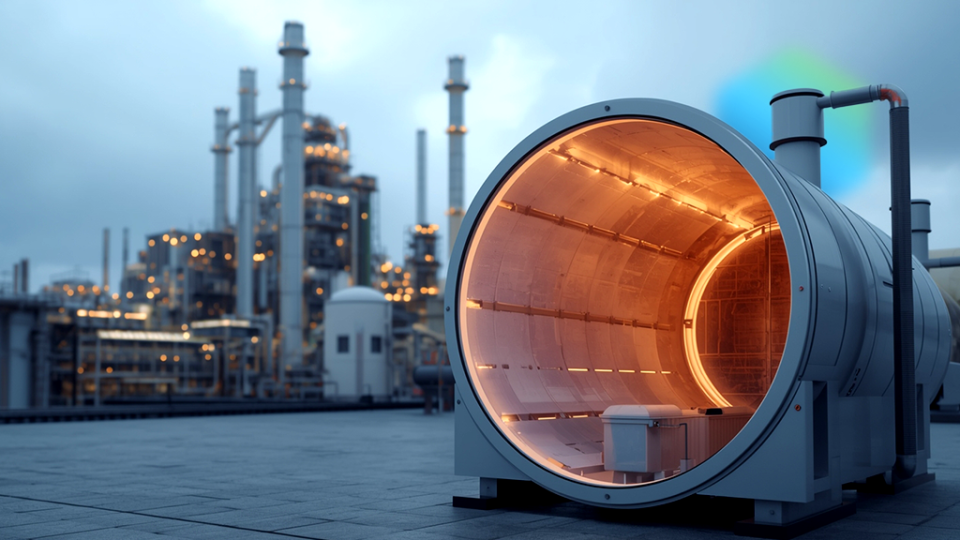
Thermal energy storage is becoming a vital technology, enabling industries such as steel, cement, chemicals, and power generation to accelerate their decarbonization efforts. Businesses are facing bottlenecks in transforming variable power supplies into dependable, high-temperature heat for continuous industrial operations, given the growing electrification of heat through power-to-heat systems and the growing reliance on renewable electricity.
Thermal energy storage addresses this gap by decoupling energy generation from energy use. It enables load shifting, improves grid flexibility, and ensures round-the-clock heat availability for critical processes. In addition to lowering emissions, it helps stabilize long-term energy costs, enhance operational resilience, and strengthen energy security. Thermal energy storage is rapidly evolving from an experimental concept to a strategic infrastructure choice for many energy-intensive industries.
Why Integrating Thermal Energy Storage Isn’t a Simple Technology Swap
Despite its promise, adopting energy storage is far from plug-and-play. The construction of most industrial facilities involves fossil-fuel-based heating systems that have been refined over decades. Integrating storage introduces a complex set of technical, economic, and operational considerations.
Businesses must assess temperature compatibility, space availability, integration with current furnaces or reactors, and the effects on process reliability. Meanwhile, concerns about material durability at high temperatures, technology maturity, scalability, and lifecycle economics often delay decision-making. The market itself is fragmented, with various solution architectures and storage concepts vying for consumers’ attention. Designing a transition pathway that minimizes disruption while delivering credible, long-term decarbonization value is the true challenge, not choosing a single technology.
How Enterprises Are Building Their Energy Storage Playbook
Forward-thinking companies aim to adopt a phased, strategy-led approach instead of disruptive overhauls. Prioritizing high-impact use cases where thermal energy storage can provide immediate operational and financial benefits is the first step they take. Simultaneously, they evaluate the state of technology to find solutions that best meet their scale-up goals, integration limitations, and temperature requirements.
To ensure implementation viability and long-term scalability, businesses also shortlist appropriate solution providers as part of this process. This allows for stepwise scaling from pilots to industrial rollouts, hybrid operation alongside current systems, and modular integration. Businesses lower risk, accelerate learning curves, and gradually integrate thermal energy storage into their long-term electrification and net-zero strategies by coordinating technology selections and deployment schedules.
See how a structured, market-driven approach brings clarity to a complex transition.
Dive into the full case study and unlock it by filling out the form.


