
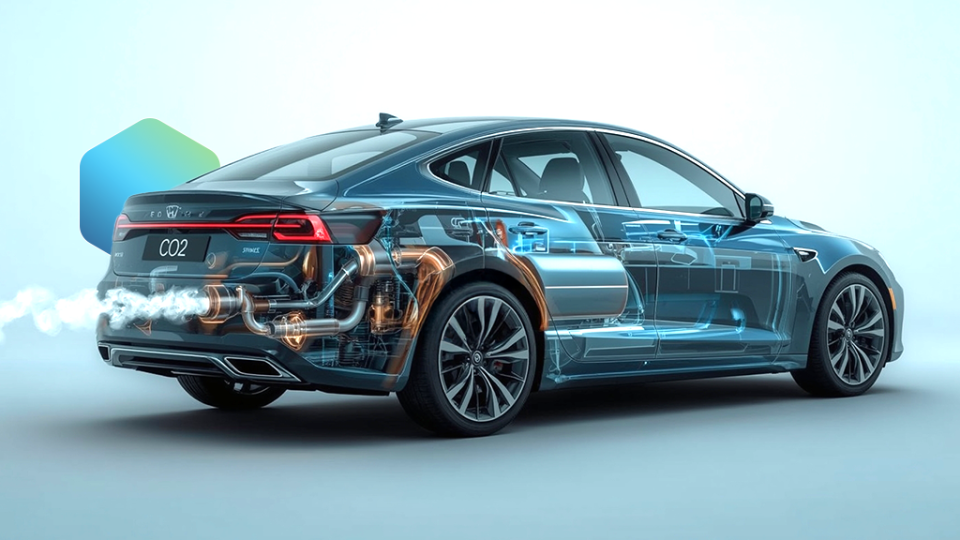
Automotive decarbonization is about to enter a more complex era. Decarbonization-oriented electrification and efficiency improvements have helped businesses mitigate emissions. However, a significant portion of lifecycle emissions remains unaddressed by these solutions alone, widening the gap. There is growing interest in the carbon capture market to achieve additional emissions reductions at the system level.
In addition, car manufacturers are increasingly under pressure to comply with regulations, meet investor expectations, and develop strategies to achieve net-zero emissions. Consequently, there is demand for solutions that will allow companies to address Scope 1, 2, and 3 emissions simultaneously. At the same time, the efficiency of carbon capture technology is improving, making commercial readiness imminent.
The automotive industry is about to enter a new phase in which leaders no longer see carbon capture as a distant vision, but treat it as a critical business strategy.
The Real Challenges Behind Scaling Carbon Capture in Automotive Sector
Despite growing momentum around carbon capture for automotive applications, some challenges remain. Technologies must be efficient, thermal management must be optimized, and there must be a feasible way to integrate existing manufacturing infrastructure in the carbon capture market. There is still a high cost to retrofitting existing infrastructure. Also, uncertainty remains regarding government policies, infrastructure development, and long-term agreements for the captured CO2.
Strategic Pathways to Unlock Market Opportunities
Leading organizations opt for approaches that build on what is already working in carbon capture, rather than experimenting at a broader scale. For automotive companies to recognize and adopt best-fit carbon capture technologies, they need to identify applications that deliver verifiable emissions reductions, align with defined policy regions, and focus their efforts on viable commercial CO2 applications. By building an ecosystem of partnerships among technology, industrial, and mobility companies, organizations can develop effective commercialization strategies for carbon capture. A phased strategy, grounded in demand-led use cases and supported by data-driven market assessment, allows companies to transform carbon capture from a compliance response into a durable growth lever within the evolving carbon capture market.
Want to understand where carbon capture delivers commercial value today, and where risks still demand caution?
Explore the complete case study by filling out the form.


