
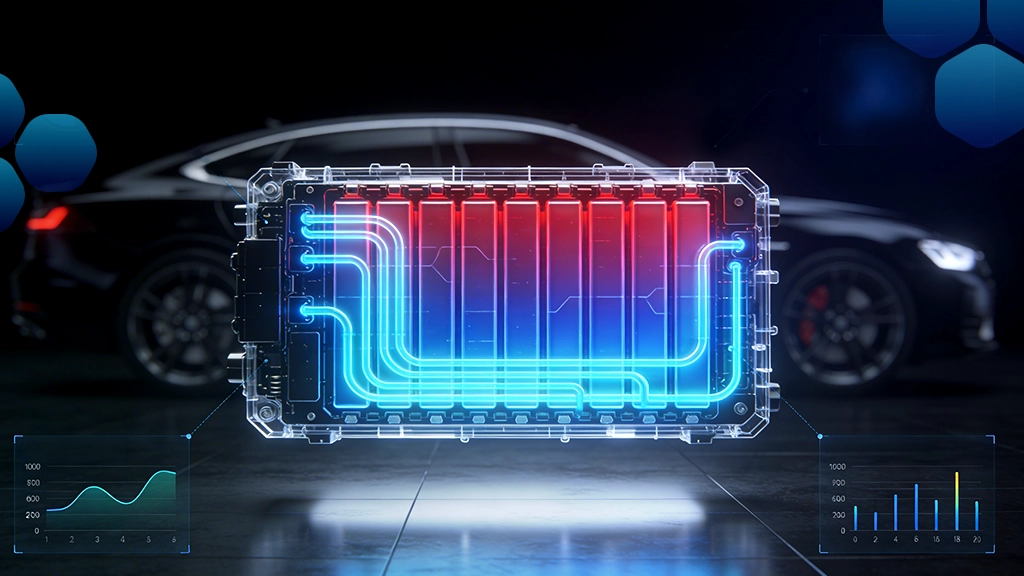
With the evolution of the mobility sector towards electric and autonomous vehicles, performance is no longer measured by the amount of battery you have. It’s defined by how well you manage heat. In high-density EV architectures, extreme temperature fluctuations can compromise safety, reduce battery life, and erode overall efficiency. This is where next-generation battery thermal management systems come into play.
Why Battery Thermal Architecture Can’t Be an Afterthought
Modern mobility platforms demand far more than basic cooling. They require integrated thermal management solutions that maintain optimal operating temperatures across battery packs, power electronics, and onboard computing units. For OEMs and Tier-1 suppliers, the challenge is developing battery thermal systems that improve efficiency without adding complexity and cost.
As the electric vehicle industry continues to evolve, heat management is no longer a secondary concern; it’s a determining factor in range, charging speed, robustness, and the overall viability of the build. When battery thermal management systems are not optimized, additional power is consumed to meet cooling requirements. This reduces the effective battery capacity and can also create scalability challenges across different vehicle models.
The Shift Toward System-Level Optimization
The need for cooling becomes even more pressing as EVs continue to evolve into software-based, autonomous platforms. Ultra-fast processors, ADAS, and new battery storage solutions all contribute to increased temperatures. If battery thermal management systems are not flexible & scalable, the improvements we are seeing in one subsystem can be offset by the effects of heat in another.
As a result, visionary companies are abandoning isolated cooling strategies and embracing a comprehensive, system-level approach. The focus is now shifting to integrating liquid cooling, advanced materials, optimized HVAC system integration, and strategic heat dissipation solutions.
Building Scalable Thermal Foundations for Future Mobility
For automotive leaders, the real opportunity lies in developing battery thermal management systems that are modular, application-focused, and adaptable across emerging use cases; from EVs and autonomous vehicles to stationary energy storage.
See how we helped a global automotive player unlock approximately $300K in annual energy savings and achieve a 12% improvement in overall battery efficiency through a structured evaluation of next-generation thermal management solutions.
Explore the complete case study by filling out the form.


